Quick answer
Business funding for transport and logistics operators usually covers the gap between paying fuel, tyres, maintenance, registration and drivers every week and being paid by freight customers on 30 to 60 day terms. Lines of credit and invoice finance cover the timing gap, equipment finance covers trucks and trailers, and property-secured loans from $20k to $5m suit larger needs.
Key points
- Fuel, drivers and maintenance are paid weekly; freight is paid on terms
- Registration, insurance and tyres arrive in lumps
- Invoice finance suits operators with business customers on account
- Equipment finance funds trucks, trailers and forklifts
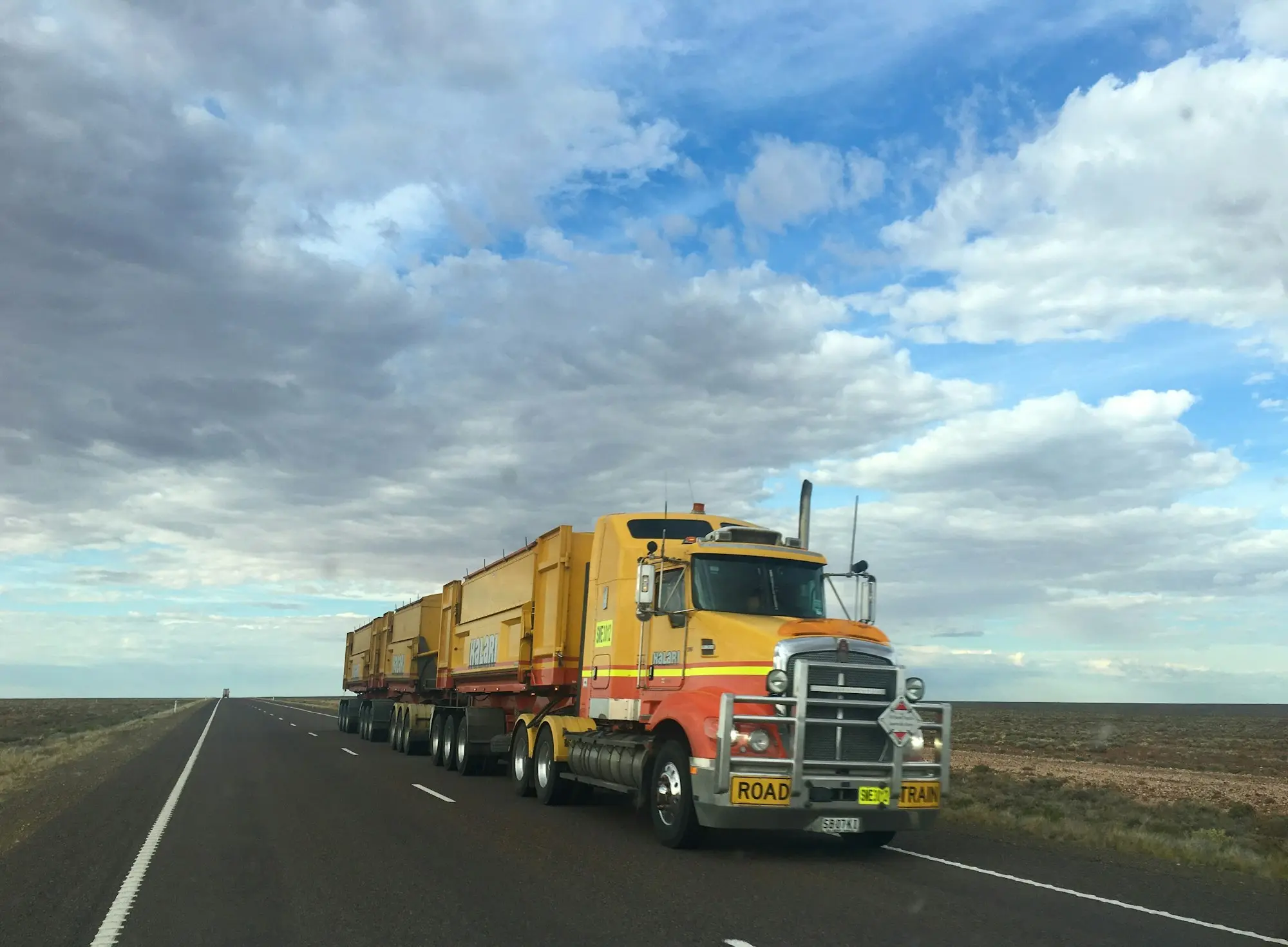
Transport businesses move other people’s goods, and they usually wait to be paid for it. Fuel, wages, tolls and maintenance go out every week, while freight customers pay monthly on account. Big lumpy costs such as registration, insurance and a set of tyres can arrive in the same month, and a truck off the road earns nothing.
How cash moves through transport operators
Most freight work is invoiced weekly or monthly to business customers on 30 to 60 day terms. Fuel cards, driver wages and toll accounts run weekly. Registration and insurance are annual or quarterly. Repairs are unpredictable. That means a transport business can be profitable across the year and still dip sharply in particular weeks, especially when a big customer pays late.
What usually triggers a funding need
- Fuel and wages due weekly while customers pay monthly.
- Registration and insurance renewals for several vehicles at once.
- Unexpected breakdowns and the cost of hiring a replacement.
- Winning a new contract that needs another truck.
- Rising costs eating into fixed-rate contracts.
See what is on offer before you commit to anything. The enquiry is free, runs no credit check and does not lock you into a thing.
Options worth considering
| Funding | Why it suits transport operators |
|---|---|
| Invoice finance | Freight customers on account, funding grows with loads |
| Line of credit | Rego, insurance and fuel spikes |
| Equipment finance | Prime movers, trailers, rigid trucks and forklifts |
| Property-secured loan | Larger fleet or depot needs and tax catch-ups |
How a lender assesses transport operators
- Freight customer concentration and how reliably they pay.
- Existing vehicle finance and repayment history.
- Fuel and maintenance costs relative to revenue.
- Any ATO debt, which is common in the sector.
For larger amounts, or when the statements do not yet show the full picture, property security from $20k to $5m changes the assessment. No valuation is needed, and repayments can be deferred by paying interest up front or capitalising it.
Presenting your business to a lender
Lenders who see a lot of transport operators know the industry’s rhythms, but they still need to see yours. Run all income through one business account, keep BAS lodgements current and be ready to explain any unusual months, such as a big one-off job or a slow patch caused by weather or a lost client. A short note on what the money is for, how much you need and how it will be repaid does more for an application than a long business plan.
A worked example (illustrative)
A regional carrier with six trucks invoices about $210,000 a month to three customers on 45-day terms. Registration for four vehicles and two sets of tyres fall due in the same month as a slow-paying customer. An invoice finance facility releases most of the outstanding invoices within days, covering the costs without a new loan each time the timing gets tight.
Habits that ease the cash squeeze
Invoice loads promptly, use fuel levies or rise-and-fall clauses in contracts where you can, and stagger registration and insurance renewals across the year. A maintenance schedule reduces breakdowns, and a modest line of credit turns the unexpected repair into a planned draw.
The short version
- Fuel, drivers and maintenance are paid weekly; freight is paid on terms
- Registration, insurance and tyres arrive in lumps
- Invoice finance suits operators with business customers on account
- Equipment finance funds trucks, trailers and forklifts
What to expect from us
You send a 60-second enquiry with the amount, the purpose and a few facts about the business. A real person reads it, usually the same business day, and calls to fill in the gaps. For unsecured options they will ask for recent business bank statements, which can normally be shared through a secure read-only link. For property-secured options they will ask about the property and what is owed on it, with no valuation needed. You then see the offer in plain terms, including the total cost, and decide whether to go ahead. A credit check happens only at that point. If something about your situation is unusual, say so early; it is far easier to plan around a known issue than a surprise.
Funding or another fix?
Not every cash problem is a funding problem. Sometimes the better fix is a conversation with a supplier, a payment plan with the ATO, chasing an overdue invoice or adjusting prices. Funding earns its place when it solves a timing gap or unlocks an opportunity worth more than its cost. We will tell you honestly which situation you are in.
Getting your details together
A little preparation makes the first conversation far more useful, and it means the person who calls you can talk about options rather than chasing basic details:
- Your ABN and the legal name of the business.
- Online banking access, so recent statements can be shared through a secure read-only link.
- A rough figure for monthly turnover and the amount you need.
- A list of current loans and repayments, including any ATO payment plan.
- If property is involved, the address and roughly what is owed on it.
Help us match you first time
Think of the enquiry as the brief for your funding. A clear brief gets a fast, accurate answer. Give the amount you genuinely need, the revenue your bank statements will show, an honest view of your credit and a straight yes or no on property, and we can match you to the right option on the first attempt.
See what you could qualify for
If this sounds like your business, start the enquiry. It takes about 60 seconds and runs no credit check. Your details are not sprayed across the market; the team that reads your enquiry is the team that works on it. Please give real numbers rather than hopeful ones. A clear picture of turnover, credit history and property lets us point you to the right funding straight away.
Frequently asked questions
Can owner-drivers get business funding?
Yes. Owner-drivers can access equipment finance for trucks and unsecured or property-secured funding for running costs, depending on their statements and security.
Does fuel price volatility affect lending?
Lenders look at margins and how well contracts pass on fuel costs. Showing fuel levies or rise-and-fall clauses helps.
Will an enquiry affect my credit score?
No. An enquiry runs no credit check. A credit check only happens if you decide to go ahead with a specific offer.
Can transport operators with bad credit get business funding?
Often, yes. Credit marks are considered case by case, with weight on how the business trades now and any property security available. Explain the background honestly in the enquiry.
Ask right here, it takes a minute
The same 60-second enquiry, on this page. No credit check to enquire, and the person who reads it is the person who calls you.